Welcome to the September 2025 edition of the Da Vinci Satellite quarterly updates. This coming academic year these updates/newsletters are making a comeback! They’ll be used to keep everyone in the loop about our progress in launching and operating our very own CubeSat. The newsletter will present events and exciting news regarding the DVS team, that have been happening recently. Every department has made progress on the satellite, have organized events or went on trips across the world. A lot has happened since the last update, so there are plenty of things to cover. For example, our team has recently been accepted to a special program that will aid us in the launch of the satellite. We also got the chance to visit an island not exactly close to Delft.
Exciting News!
The team has made some good progress regarding the launch of the satellite, and we are pleased to announce that we have been selected to join the European Space Agency’s “Fly Your Satellite!” program. This program will support us in our ultimate mission of launching and operating our own educational CubeSat. Through this program, our team has access to state-of-the-art testing facilities at the CubeSat Support Facility at ESEC. Furthermore we get support from ESA through advice from specialists within the field. Being part of the program also means that we receive aid from ESA, for example, ESA pays for and helps organize the launch of the satellite. In the fall of 2024 the team got the opportunity to have a full week of extensive reviews with ESA’s experts. The programme also provides our engineers with feedback and the possibility to test the satellite. ESA helps us complete tests to make sure that the satellite can survive the harsh environment of space, as well as the loads during the launch of the satellite. After extensive testing and when ESA deems the satellite as space ready, our satellite will be launched into space on a rocket along with other CubeSat satellites!
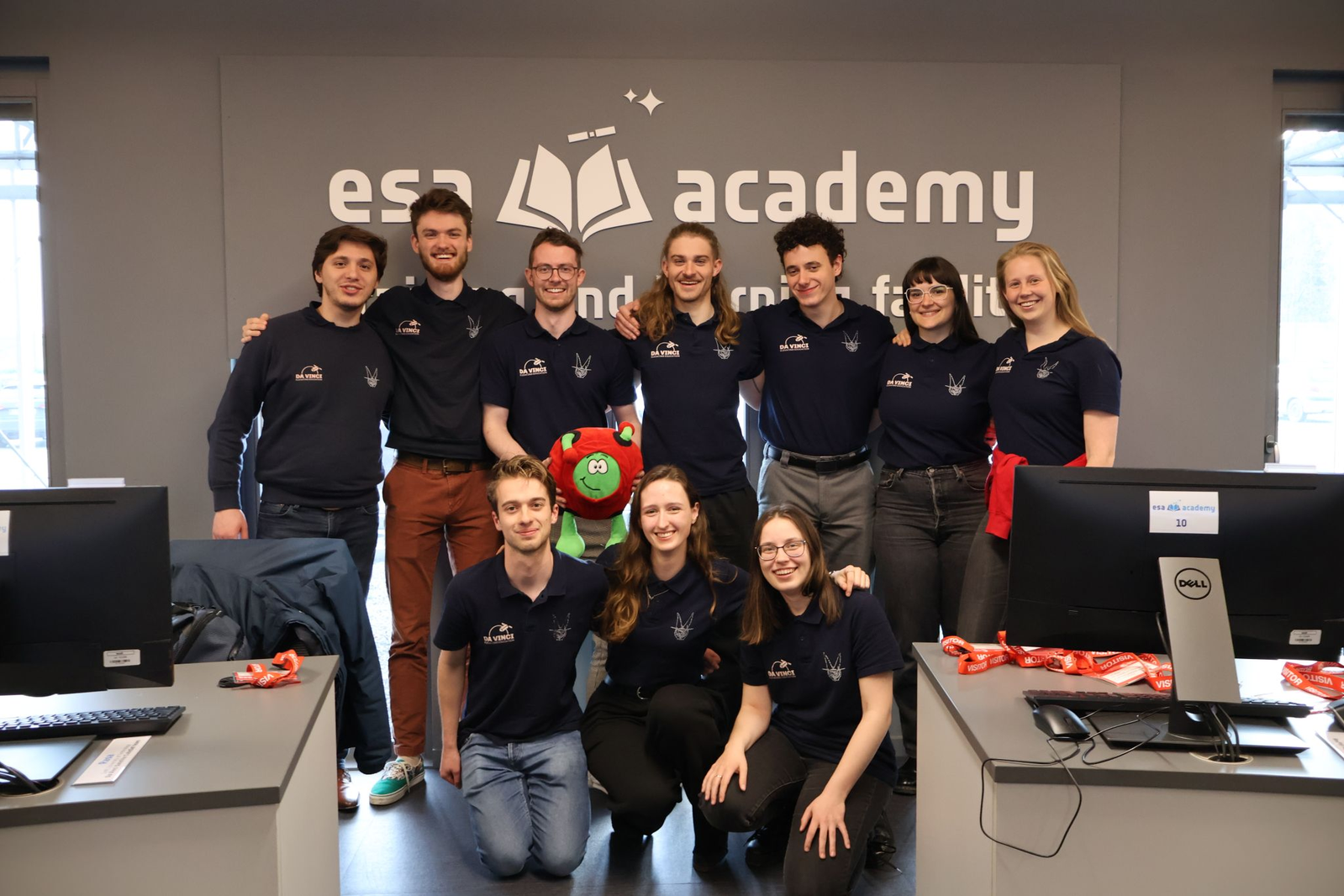
DVS visiting ESA
Technical Team
Recently the technical department has been restructured into a variety of subdepartments; Systems, Electronics & Hardware, Software, Payload and Ground Station & Operations. Currently, we are reaching the final design phase of the satellite and have to test parts to ensure survivability in space. The payload team is finalizing the design of the dice game payload and testing it to make sure it works in an environment without gravity. A while ago the department tested the system in a parabolic flight which mimics the zero gravity environment. The Electronics and hardware team is currently focused on ensuring our solar panels work properly. This however poses quite a challenge since solar panels made for space differ from solar panels on earth. High energy particles, temperature differences and reliability requirements require different materials and extensive testing to ensure success.
The GS&O team is preparing the software required for the operation of the satellite for when it is in orbit. Furthermore, we are also currently working on building a true to size mockup model of the satellite. This model can then be brought to events to present. So make sure to attend our events to get a look at the model.
In May the technical department also achieved a milestone for the ESA FYS program! ESA experts visited our lab in Delft at the Aerospace engineering faculty. The experts inspected our flight hardware, reviewed our lab procedures and got a chance to explore the faculty facilities. This day was filled with feedback, demonstrations, and lots of points to improve on the satellite. We can now get to work to improve on and incorporate the feedback received from ESA.
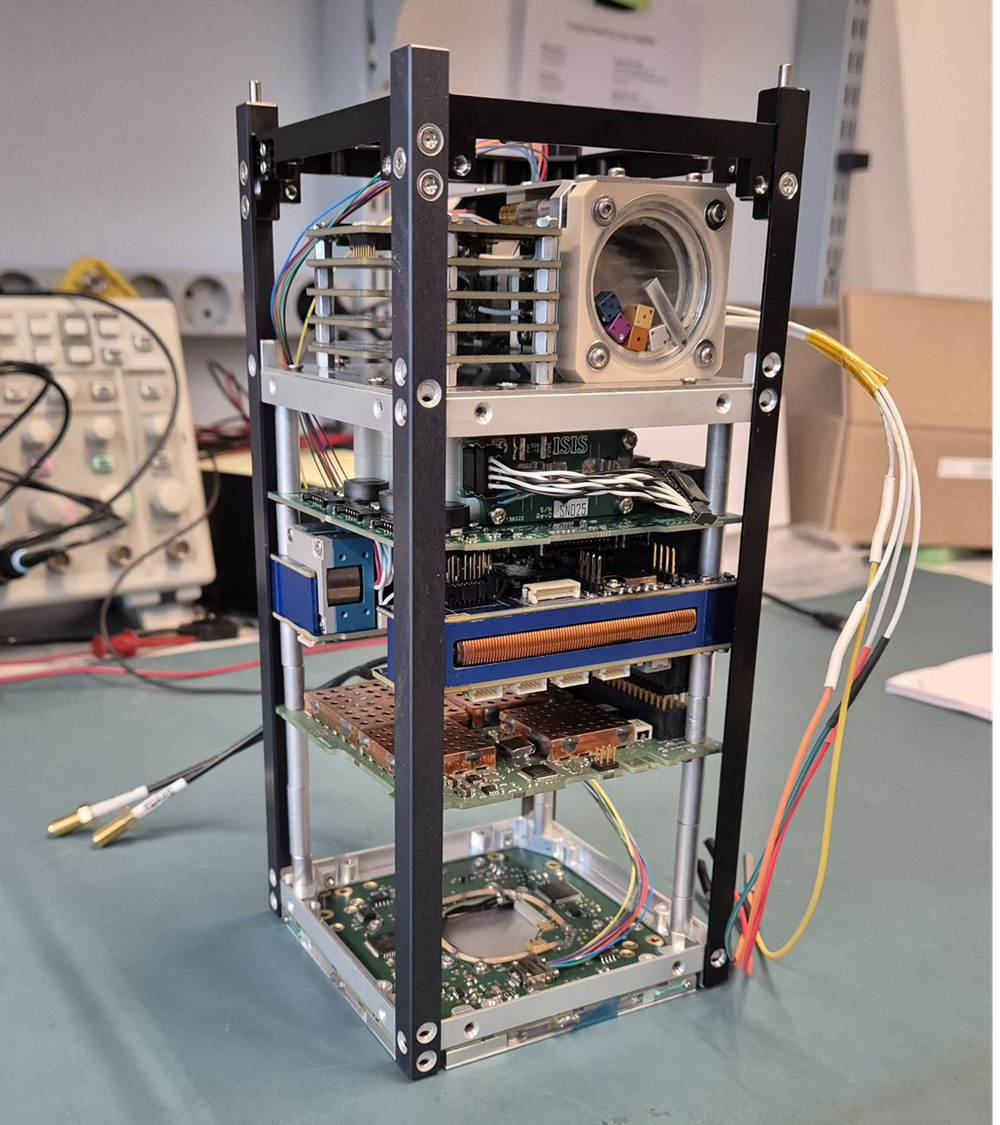
Test assembly of the satellite
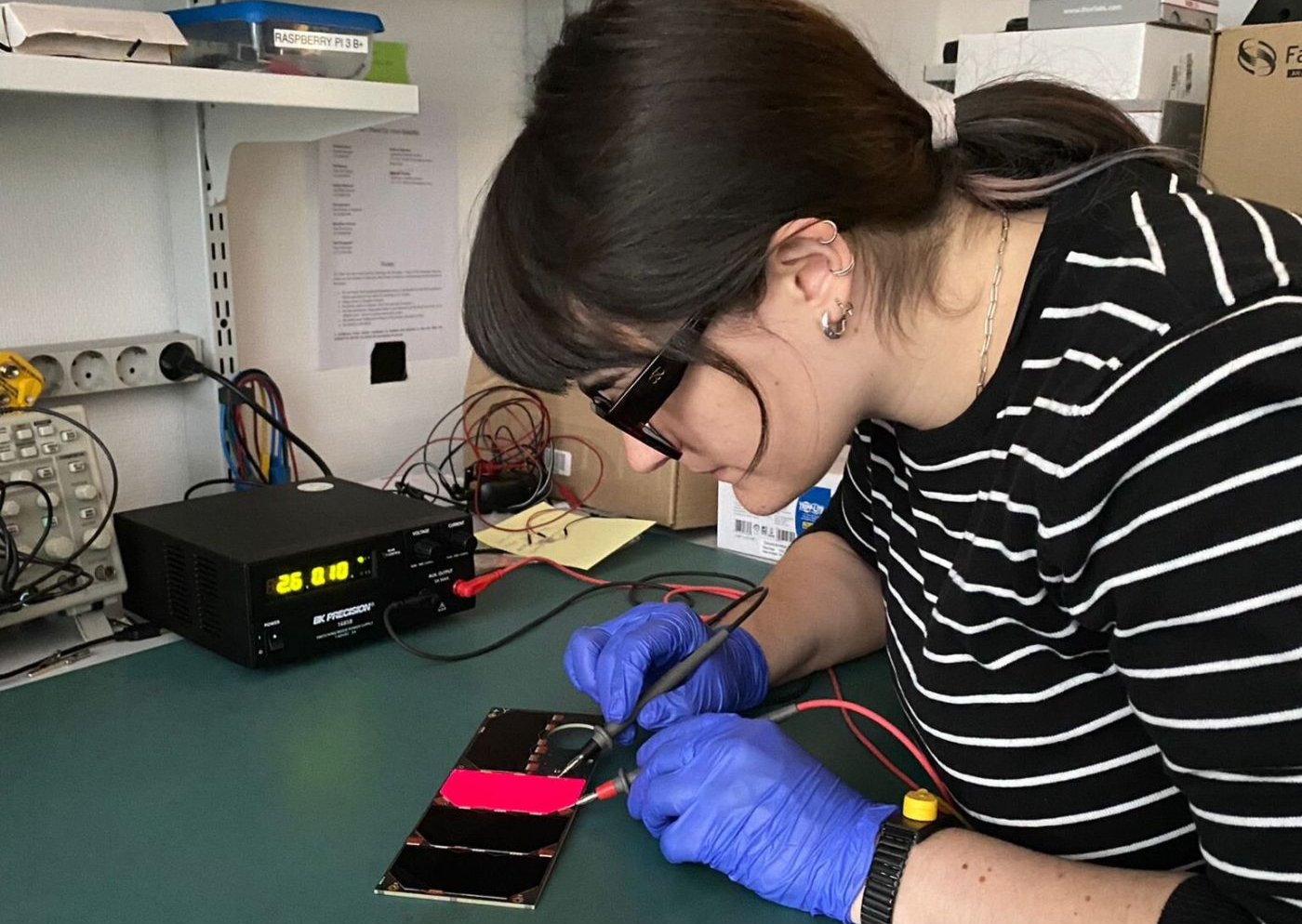
Working on the solar panels
The next step in the FYS program, is to visit ESA’s European Space Security and Education Centre in Belgium. Here we will have the opportunity to test our satellite with an Environmental test campaign. This will include tests such as vibrational tests and thermal vacuum tests. The tests are oriented around two important aspects; space conditions and launch conditions. The space tests will include utilizing
the Thermal Vacuum Chamber or Vacuum oven to recreate the vacuum and temperature conditions in space. The launch test will be performed using an Electrodynamic Shaker system which tests different types of vibrations that could occur in launch but also in orbit. These tests will hopefully confirm that our satellite is ready for space, or they will help us improve the design of the satellite.
Education
The education department is responsible for preparing a module for the education part of the satellite, as well as physically going to high schools to teach teenagers about space. The team is currently working on revamping the module on Mars and the one on black holes. To accomplice the Mars module, the team is also designing and testing a new board game. Additionally, they have been doing some testing in different high and primary schools in the region.
Last academic year, our education team had the opportunity to travel to Bonaire to spread our message of space education. Bonaire is a small island off the northern coast of South America. Bonaire has a ground station for satellites that is a part of the European Galileo satellite system, which helps communicate with and track European satellites. The team had the opportunity to visit multiple schools on the island and got to teach kids about deep space exploration, as well as let them make small model rockets. The kids learnt about what a ground station does and how it can communicate with satellites in space. We finished off the trip with a workshop for teachers, so that space education can continue in Bonaire. They will have a yearly space week in schools where teachers will teach our content! The trip definitely inspired the children to dream about the possibilities that humankind has, to explore the vast thing called space.
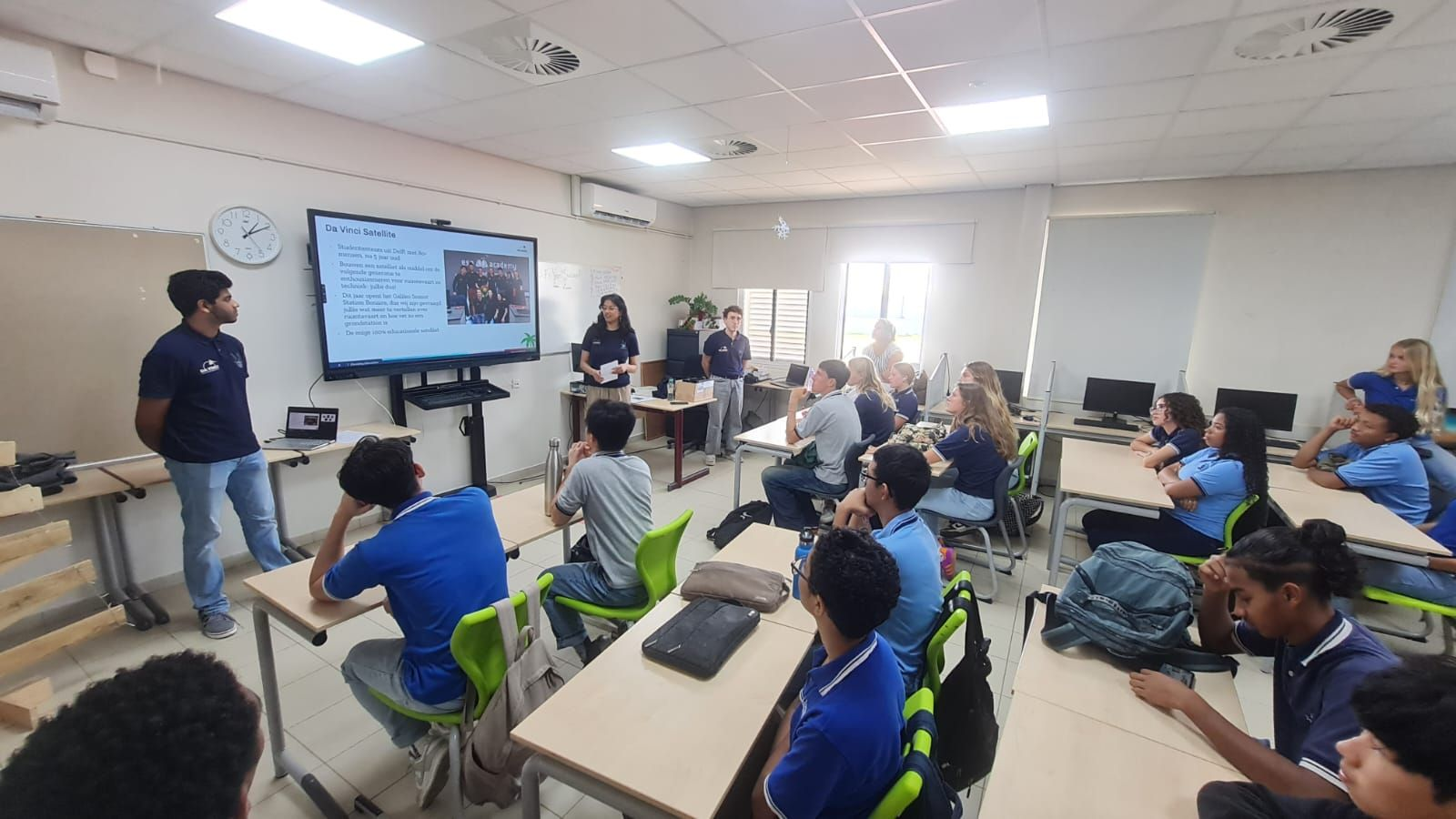
Teaching at a school in Bonaire
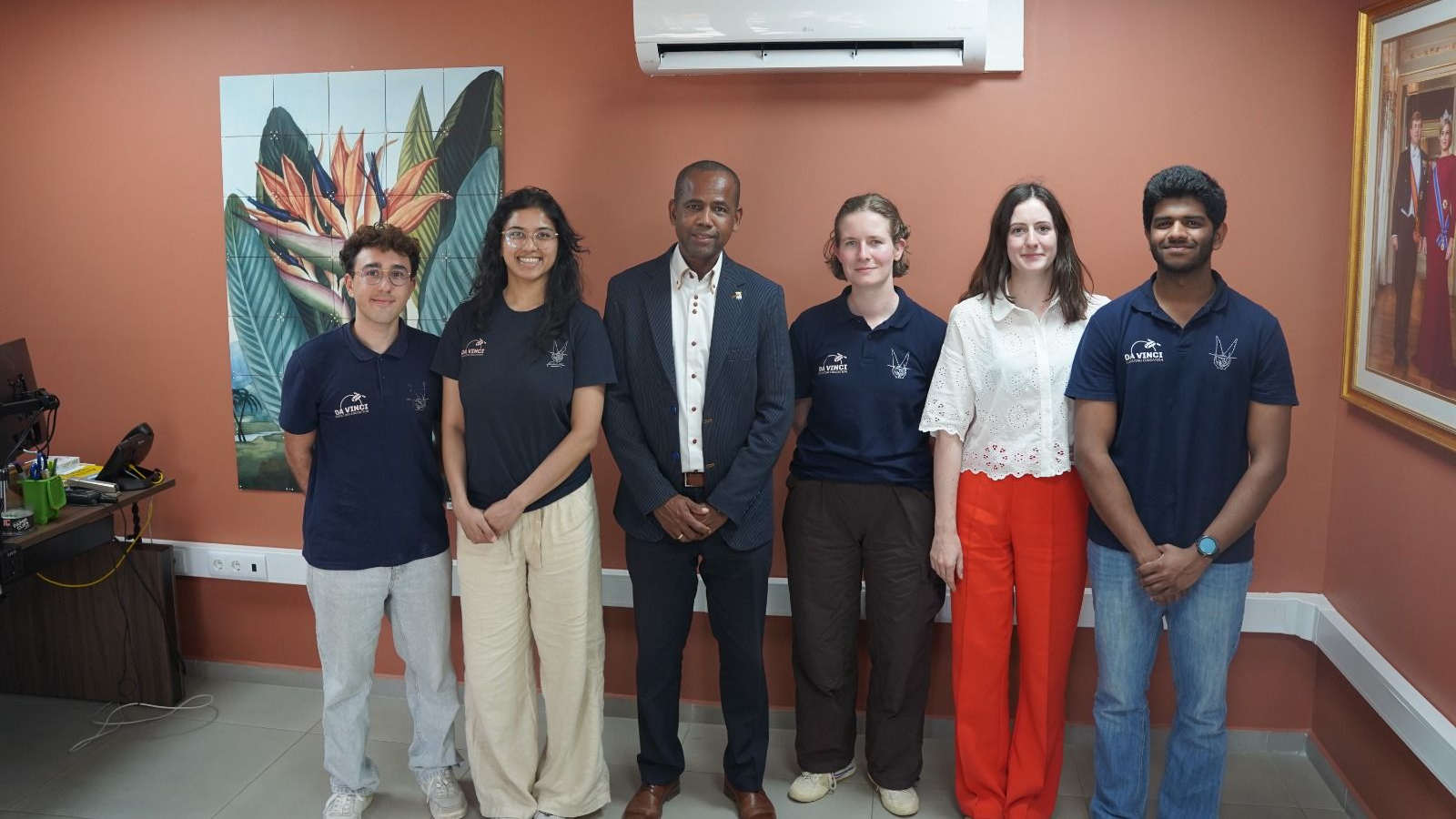
The team in Bonaire
Website progress
DVS is also preparing our new website that will accompany our satellite and help educate. It is currently in its starting stages and mostly includes preliminary planning and proposals. The core team is currently busy compiling and creating a guide for a UI designer, who will be drafting a preliminary design of the website pages. This guide includes multiple aspects, like the style and brand guides, writing the sections but also the vision of the website.
The new website will take the place of the current one, and its main aim will be to educate. The website will be used in lessons for primary schools and high schools. Furthermore, on the website the students will be able to play interactive games with accompany the lesson package provided by us. Additionally, the website allows people to access the educational payloads, the dice game and the bit flip image. So make sure to keep your eyes out for when the new website is online!
Business
Recently, the business department has been restructured into two departments; the finance and communications teams. The finance team ensures that our operations run smoothly without exceeding our budget. Recently, the finance team took part in an acquisition workshop. At the workshop, the team had the opportunity to refine their outreach techniques. The finance team also secured a new contract with Eurocircuits. Eurocircuits is a German company that helps us manufacture the electrical circuits and PCBs we need for our satellite. We are also currently in contact with Edmund Optics.
They provide the lenses and optical windows for the dice payload. Furthermore, the finance team is busy obtaining quotes for developing the new website. The finance department is in close contact with the technical department to identify any potential issues that could cause the budget to exceed expectations.
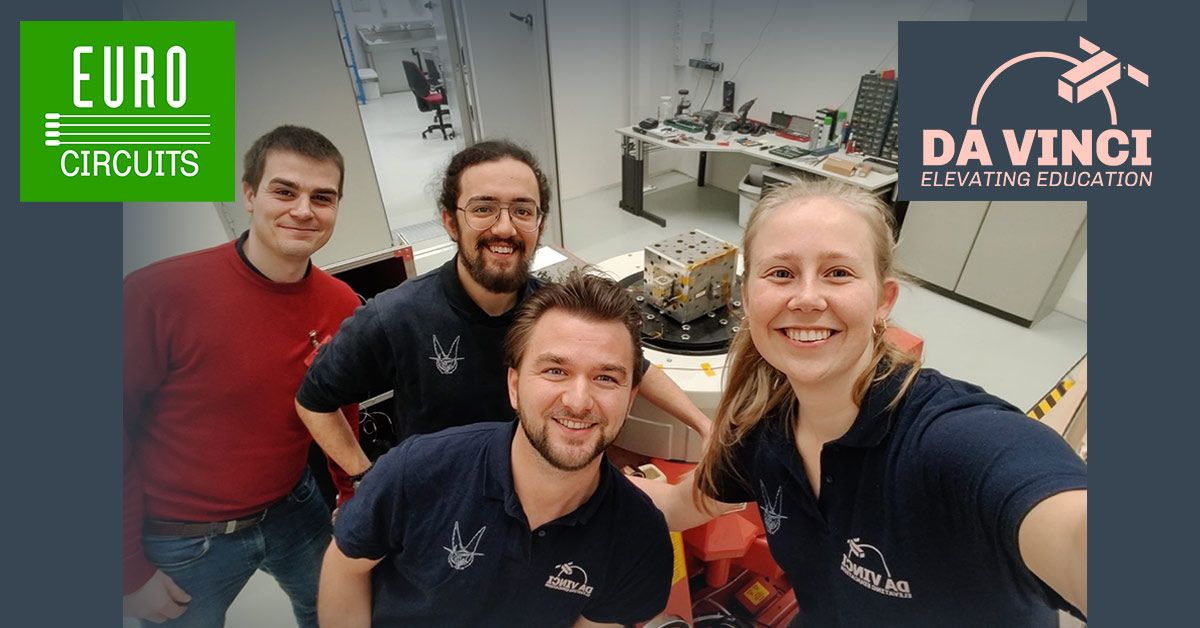
DVS with Eurocircuits
The communication team is responsible for ensuring DVS is seen through social media and is thus responsible for the presentation and marketing of the team. This is done through Instagram, linkedin and the website, with frequent
posts and updates on exciting things that are happening in and around DVS. These include the website blog, trips the teams make and updates on the progress of the satellite itself. Make sure to follow us on Instagram (@davincisatellite) and LinkedIn to make sure you don’t miss any updates.
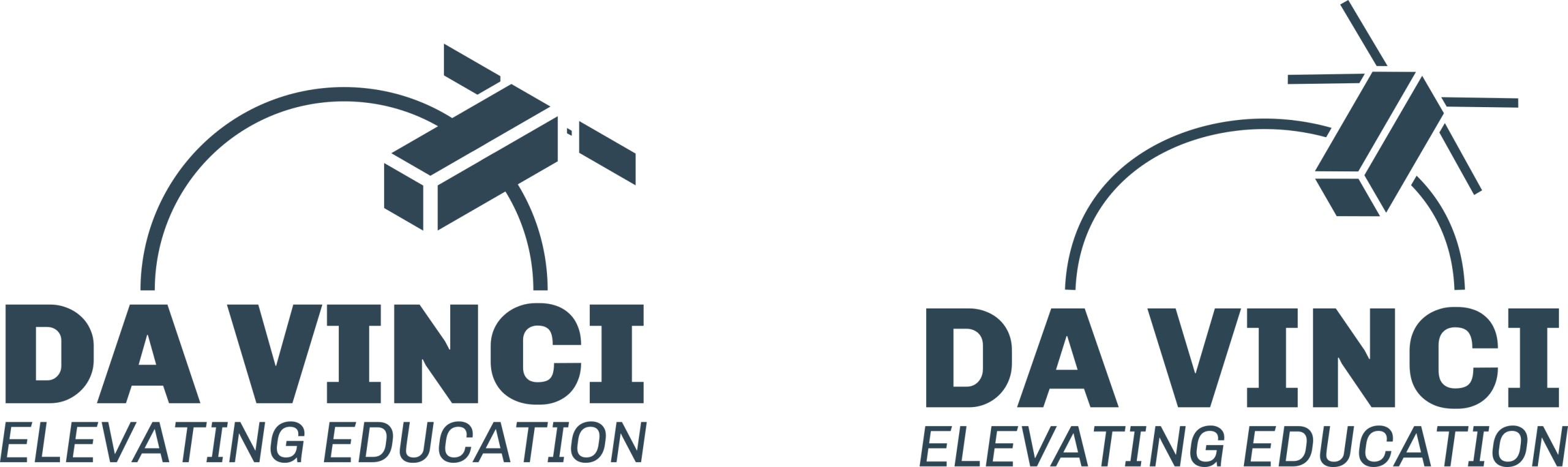
Old (left) and new logos
As you might have noticed, DVS has a new logo. This logo better reflects the actual design of the satellite. The communication team has been busy updating the team merchandise to fit the new logo. Additionally a photo day was arranged. Here the team took individual, department and team pictures.
Aside from hard work to achieve our goals, at DVS we also have the opportunity to attend social events to connect and make friends within the team. Recently we had a team wide BBQ where we took the opportunity to catch up with each other. We will also attend the NL space week this October so make sure to come by and say hi!
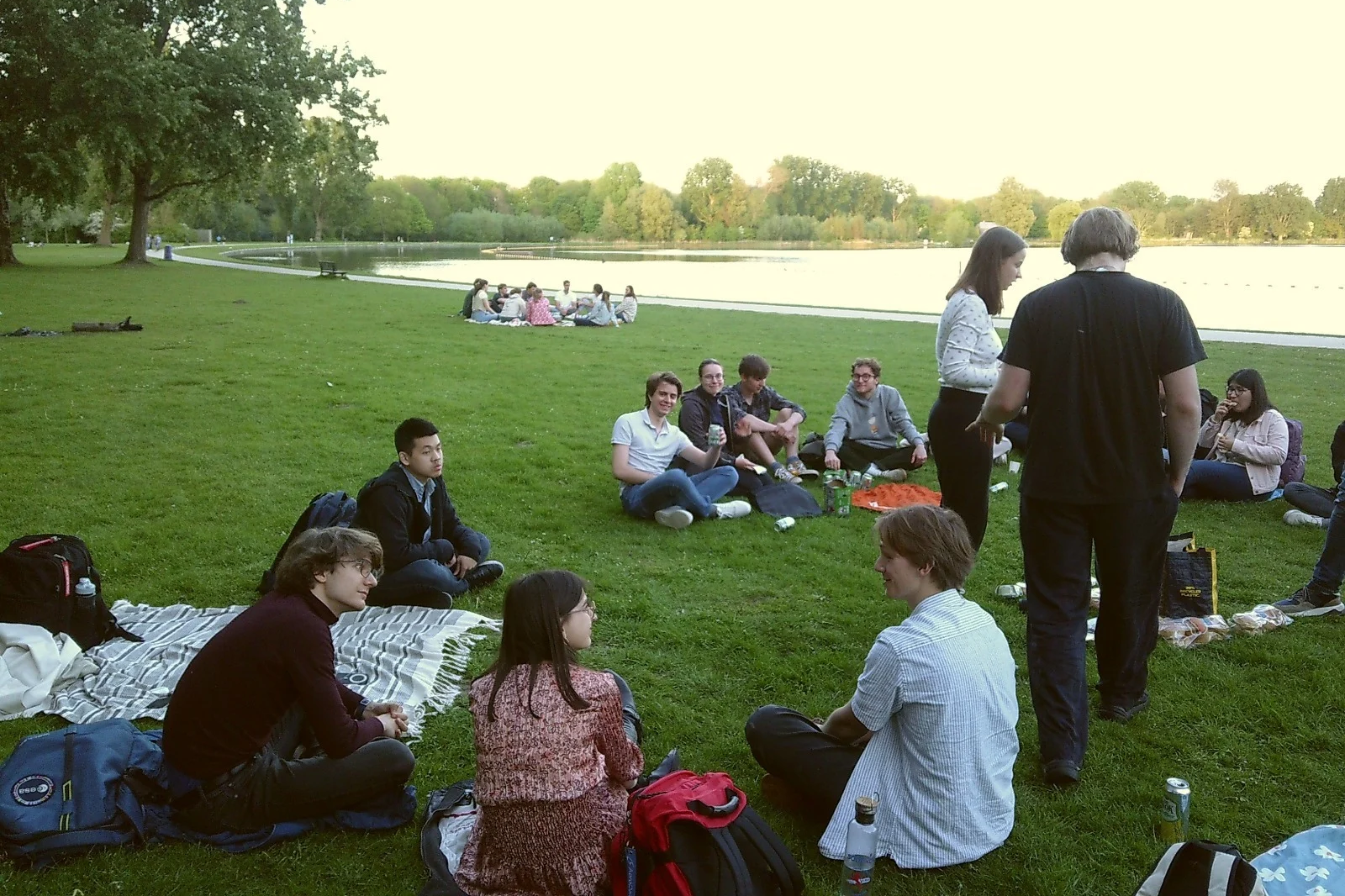
DVS Team BBQ
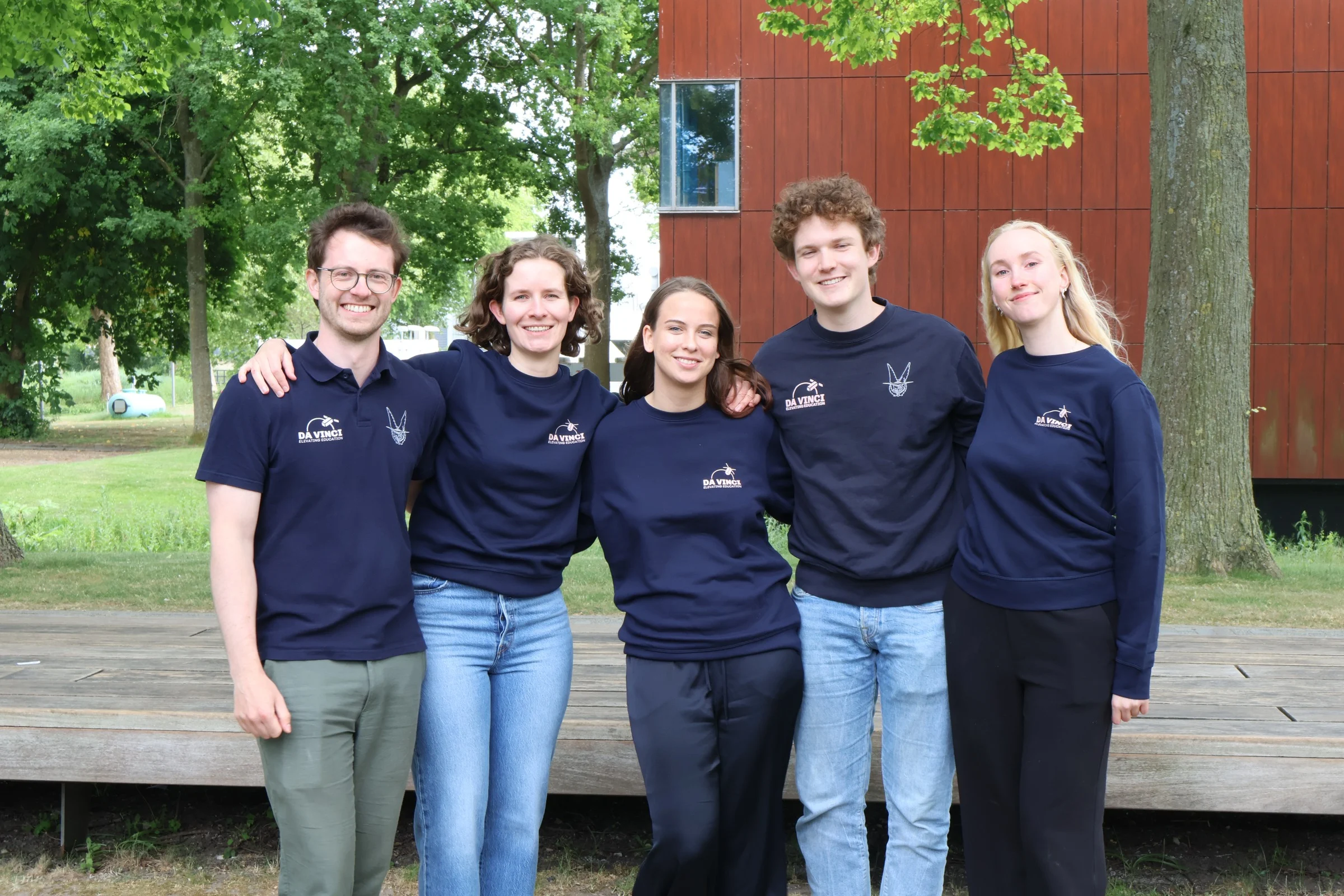
Core team 2024/25