As mentioned in our quarterly updates, DVS has received the green light from ESA to qualify our payload. This means we can go to Belgium to begin testing at ESA’s facilities. The two-week test campaign is set to begin in April, with 8 of our team members taking part.
Overview
Da Vinci Satellite is part of the European Space Agency’s Fly Your Satellite! (FYS!) programme. This hands-on initiative supports university teams in designing, building, testing, launching and operating their own CubeSat missions, providing professional-level guidance throughout. Experts from the ESA provide us advice and formal engineering reviews on how to improve our satellite. Additionally, we can use ESA facilities to validate our spacecraft under simulated space conditions. One of the most valuable parts of the project is the possibility of gaining practical experience at the industry standards level.
One of our payloads is the Bitflip Payload. The purpose of this payload is to show how radiation affects file storage in space. This will be done through our website. Users will be able to upload an image, which will be uplinked to the satellite. The payload will let the data from the image be subjected to cosmic radiation, which will cause some of the bits that store the information to flip from zero to one or vice versa. The image will change and be downlinked back to the user to see the effects. In our book, students can learn about different methods that exist to overcome this issue in space.
The other payload is the Dice Payload. It has two functions: demonstrating the effects of zero gravity and enabling children to play with dice in space. It allows dice to float freely in an enclosed space. Users can communicate with the satellite to roll the dice. The payload then clamps the dice into a fixed position and takes a picture with relevant objects in the background (e.g. Earth, the Moon or the Sun). This picture is then downlinked to our ground station and displayed on the aforementioned website. Children can then use the result of the dice roll to play a game. It’s pretty cool when you think about it, rolling dice in space to play a game on Earth!
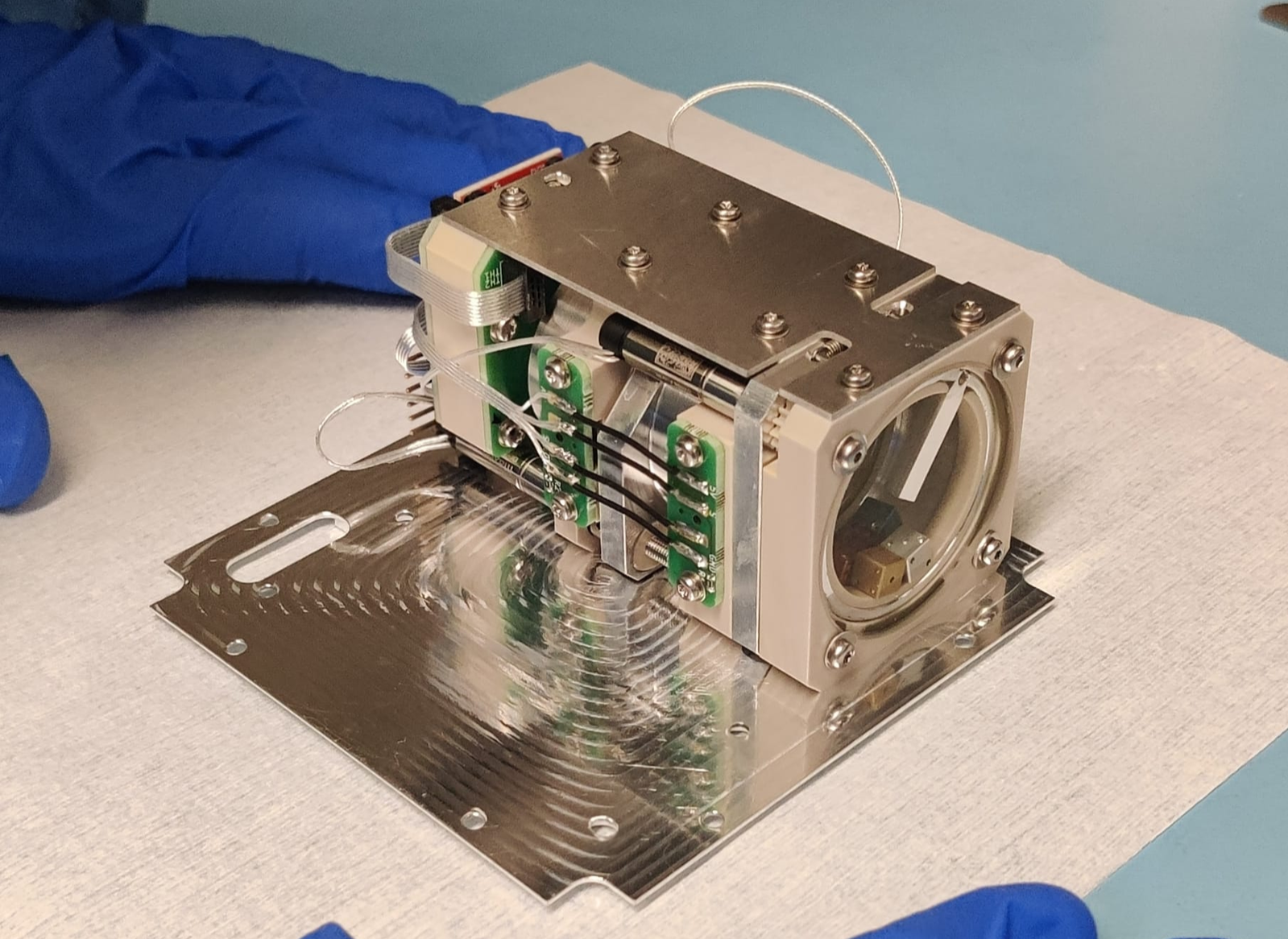
The Dice Payload
Testing in April
The ESA Greenlight is a major milestone for the team. It confirms that both payloads have successfully met the same standards that ESA would apply to other commercial missions. This level of scrutiny involves a thorough evaluation by ESA experts, meaning the designs are considered technically sound and mission-ready. In April, our BitFlip and DICE teams will travel to Belgium together to conduct tests.
Reaching this point demonstrates our team’s ability to overcome real-world engineering challenges under pressure, quite an achievement for university students. Despite facing last-minute manufacturing setbacks, such as having to rethink the use of the DICE sledge following a critical milling failure, we adapted quickly and kept the project on track. Ultimately, our achievement showcases the strength of TU Delft’s engineering capabilities. Our team has demonstrated strong design skills and the ability to test fully custom, in-house developed space hardware.
For the DICE payload, the team demonstrated strong resilience by recovering from a critical machining failure that initially threatened project progress which risked delaying the greenlight meeting.
In addition, setbacks with the sledge hardware introduced further risk to the schedule. However, through a structured engineering approach and working closely with professors Dr. S. Speretta and Dr. M.S. Uludag, our team was able to resolve these issues effectively.
These combined efforts allowed us to complete the assembly and ensure readiness for review, ultimately securing the ESA Greenlight. This represents a major milestone, as it enables the project to proceed to ESA for testing alongside the BitFlip payload.
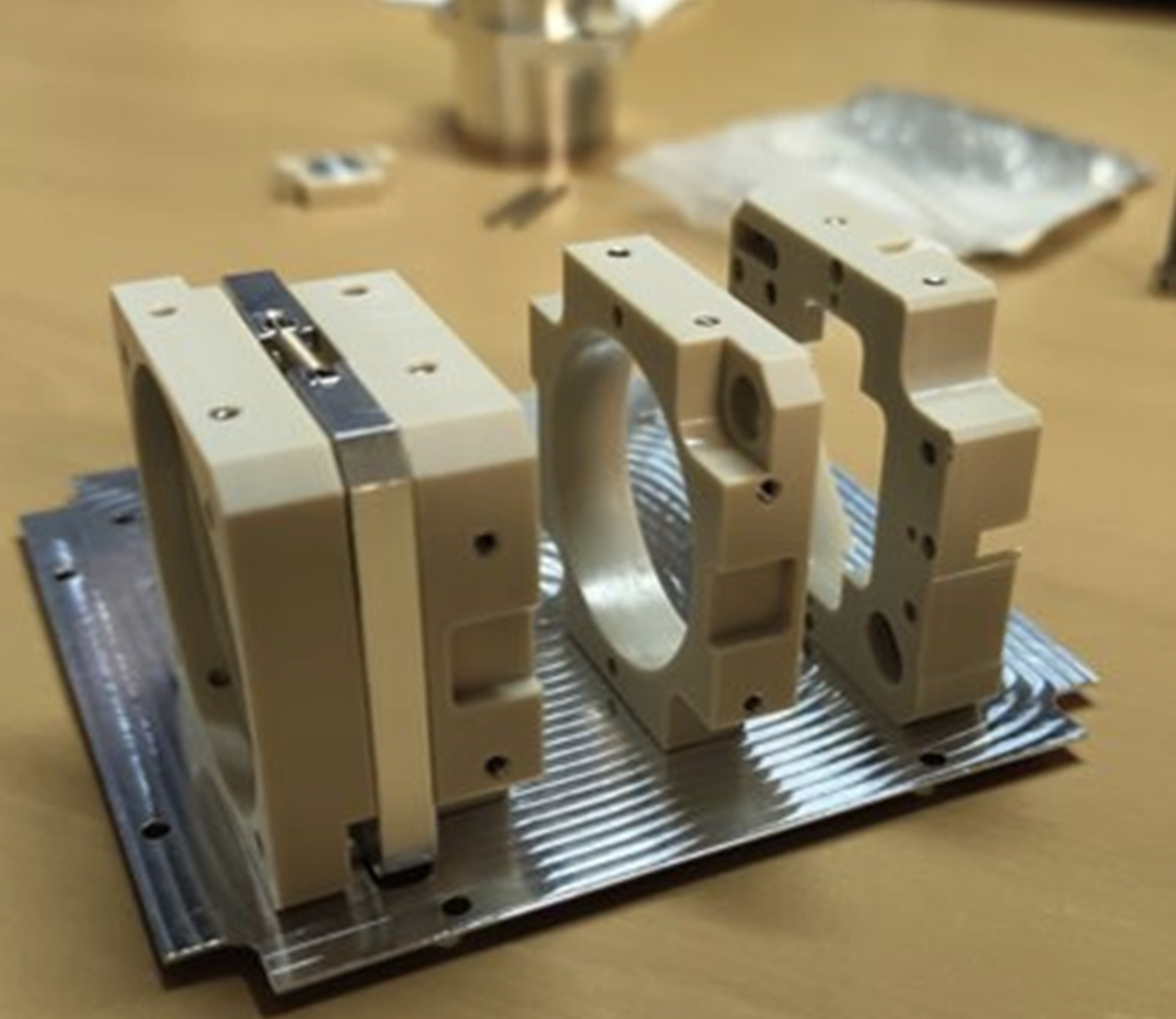
Dice payload structure
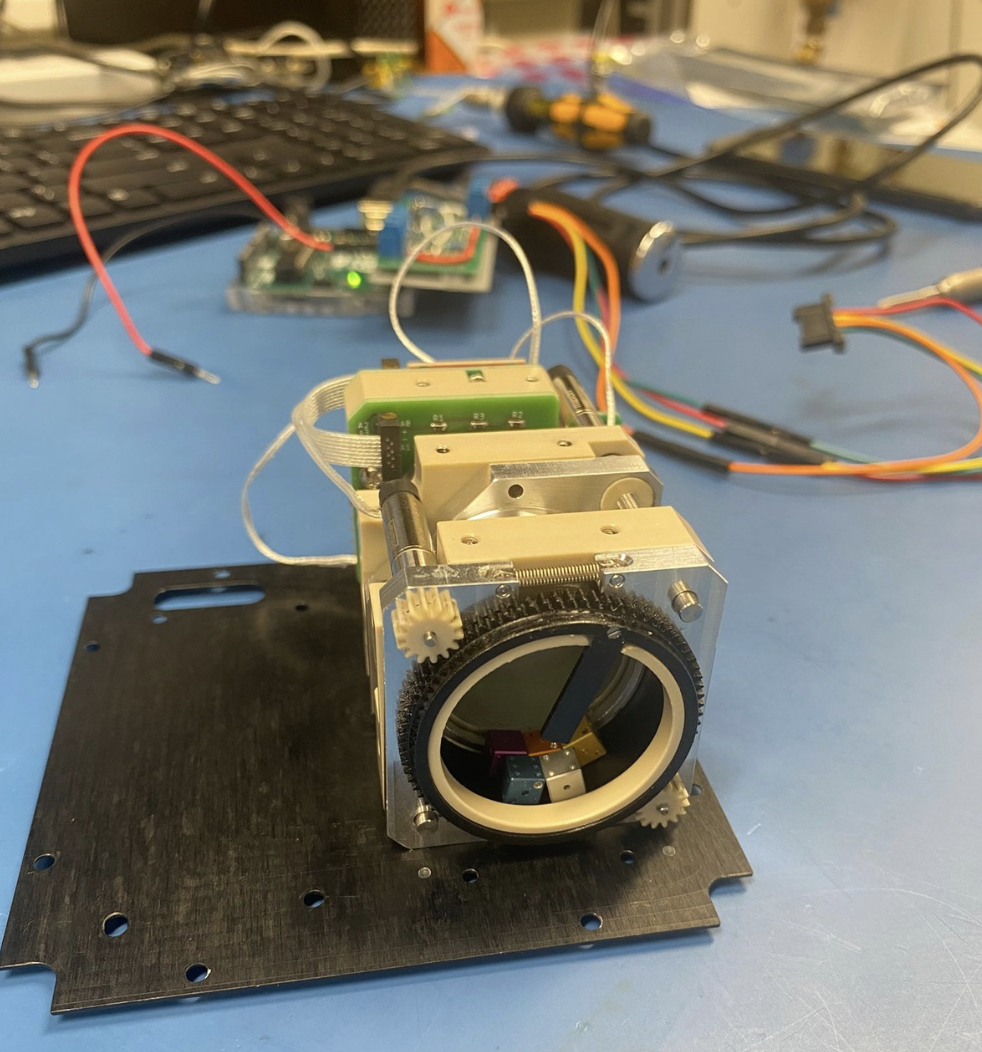
Dice payload collection mechanism
A number of critical technical achievements enabled the team to secure the ESA Greenlight. For the BitFlip payload, all memory boards were successfully manufactured, tested and integrated into the Qualification Model. This marks a major step forward, as the team progressed from having non-functional hardware to achieving a fully operational BitFlip system for the first time in the project.
The complete system passed all functional testing, including the implementation of watchdog software and reliable communication over a demanding 3-meter Spec44 cable setup, where signal attenuation posed a significant challenge. Overcoming this issue required careful debugging and validation, demonstrating strong technical execution.
Plan
Following the ESA Greenlight, the project is moving into its next critical phase. Between late March and early April, the team will finalise the Test Specification and Test Procedure (TSTP) documentation while managing the complex logistics of transporting space-grade hardware internationally. This will be followed by the final packing and preparation of the payloads and all the necessary support equipment between 6 and 10 April. On 12 April, the team will travel to the ESA Redu Facility, where the Environmental Test Campaign will officially begin the following day. During this phase, the payloads will undergo rigorous vibration and thermal vacuum testing to validate their performance under space-like conditions. Assuming the campaign is completed successfully, the project will transition on 24 April into the next stage, which will focus on integrating the whole system and verifying that it works as intended.
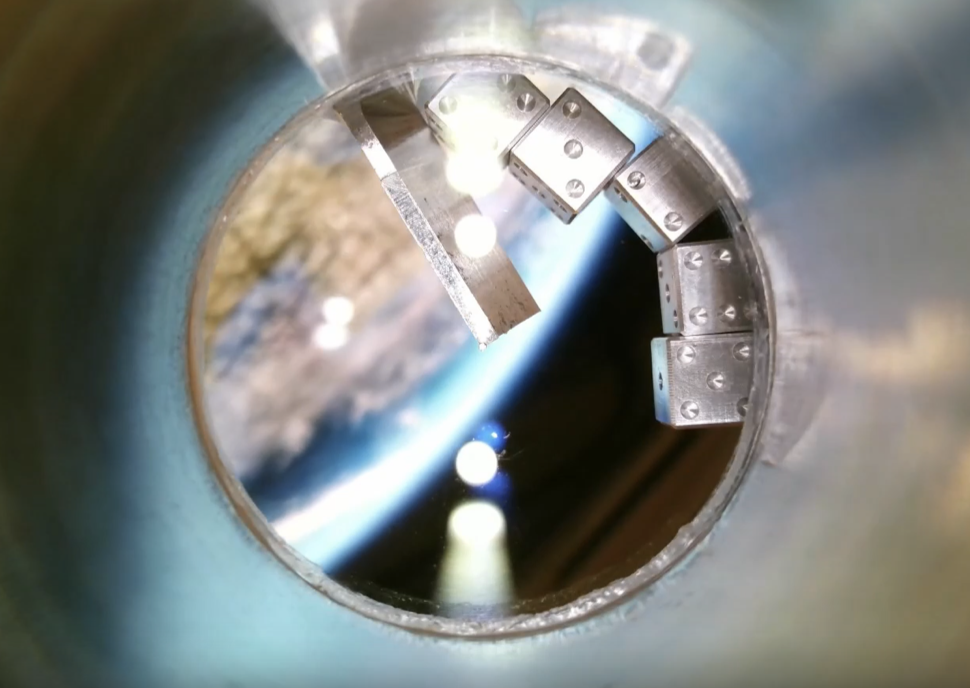
Dice in space
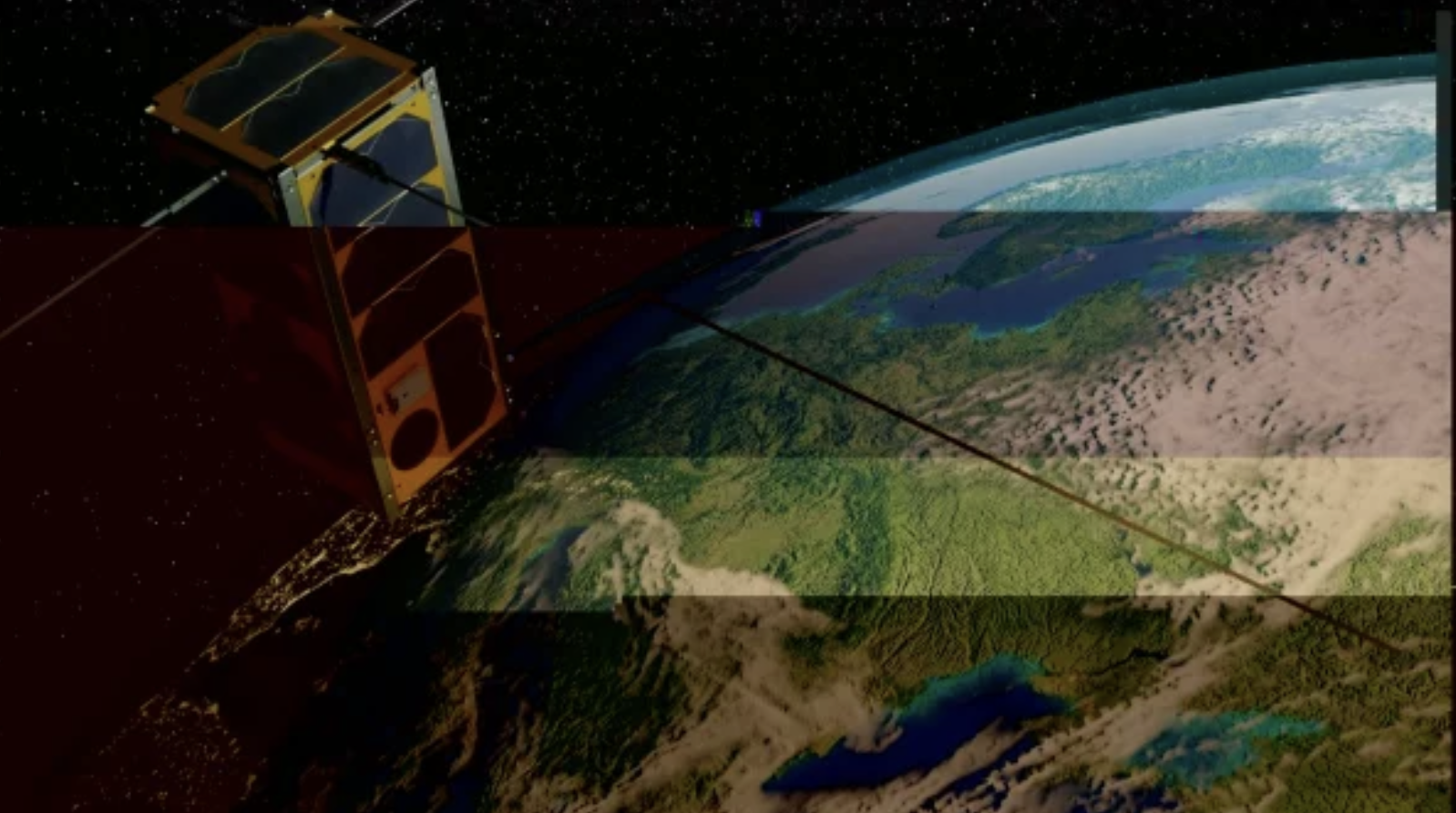
Corruption in image through the Bitflip payload
Thank you for reading our update and progress on an achievement we are incredibly proud of, our first green light. We really want to thank everyone who has supported us to achieve this. Without them, this would have never been possible. We want to thank all of the companies that provide us with our parts and systems. We want to thank ESA and its experts for all of their support and knowledge they provide us, and for selecting us to join the FYS! programme. Furthermore we would like to thank Dr. Speretta and Dr. Uludag, from the TU Delft space department, for their continued support and advice which have greatly accelerated our progress. Finally we would like to thank the Delfi Space program for their continued support.
The rest of the team is also working on our satellite. We will hopefully go back to ESA in Belgium in May to test our Command and Data Handling subsystem. If all of the tests succeed, we will begin the final assembly of the satellite this summer. This will require a lot of collaboration between the different departments, to ensure proper space ready integration of each system. After testing the final assembly at ESA, we will launch our satellite in 2027/2028 and then begin operating it from our own ground station, in Delft.
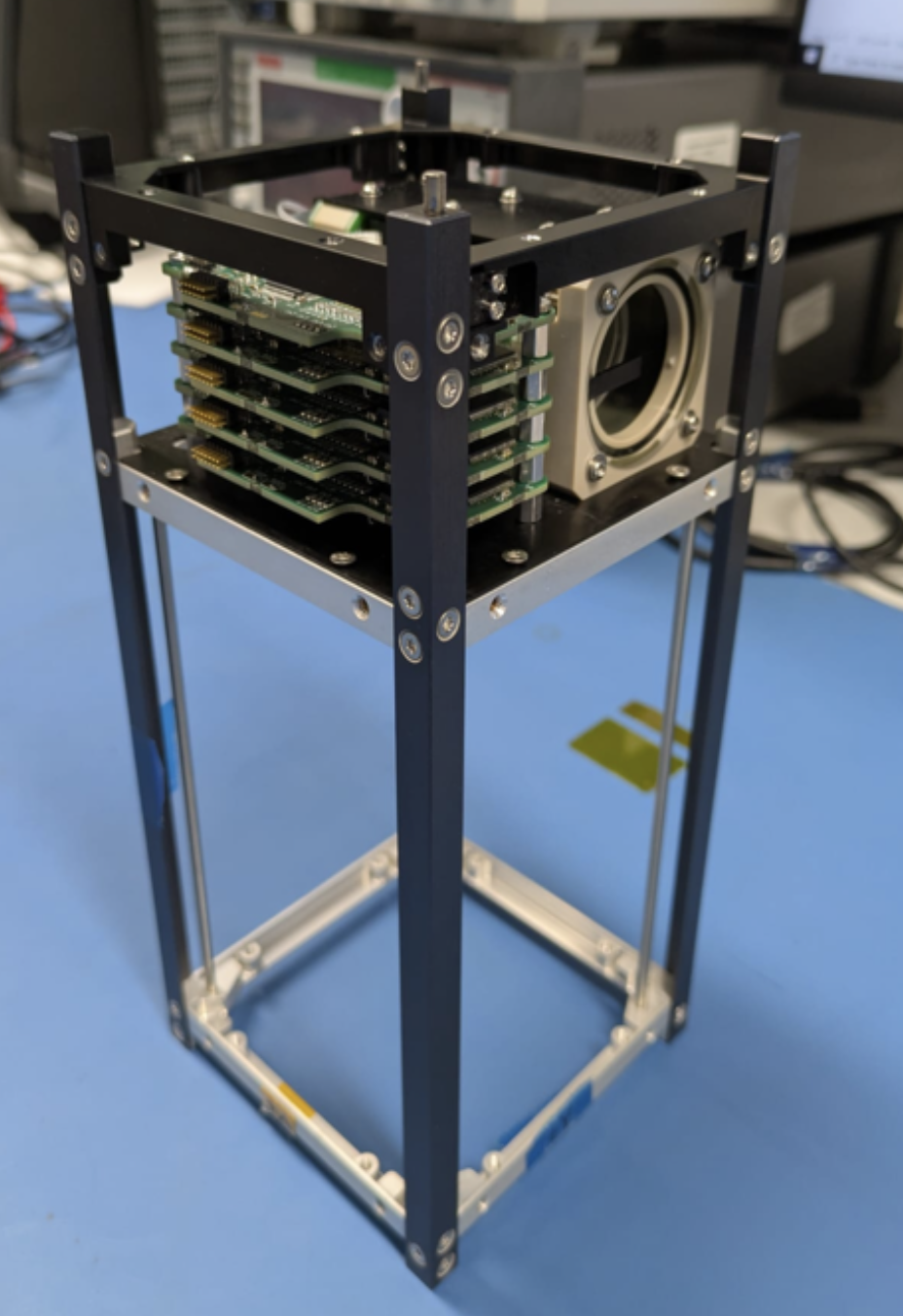
Our assembled payloads