Welcome to the March 2026 edition of the Da Vinci Satellite quarterly updates. We have continued working on our project and are excited to share what we have been up to lately. Our technical department is preparing our subsystems for testing that is coming up at the European Space Agency (ESA) soon. The Education department is preparing more educational material and will teach this at a master class event in Delft.
Website Progress
To help us communicate what we do to the public and enable them to access our educational payloads, we are designing an interactive website. Users will be able to access educational content about space as well as information on our satellite. The picture below shows the website’s general structure and the exact functionalities that will be available. Our goal is to launch the new website by the end of the year. The foundation and general structure of the website have now been finalised, and we will begin building the front-end over the summer. We aim to complete the front-end by the upcoming summer. Once this is complete, we will start a user testing phase to check the website’s functionality.
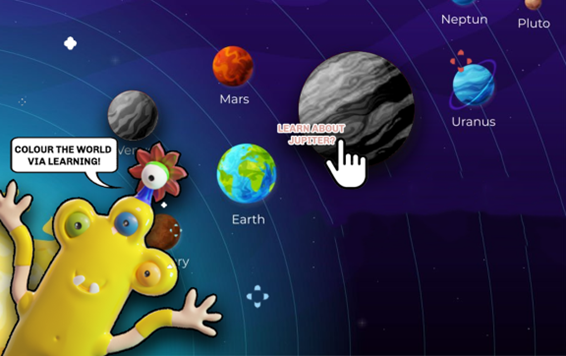
Idea for interactive learning environment
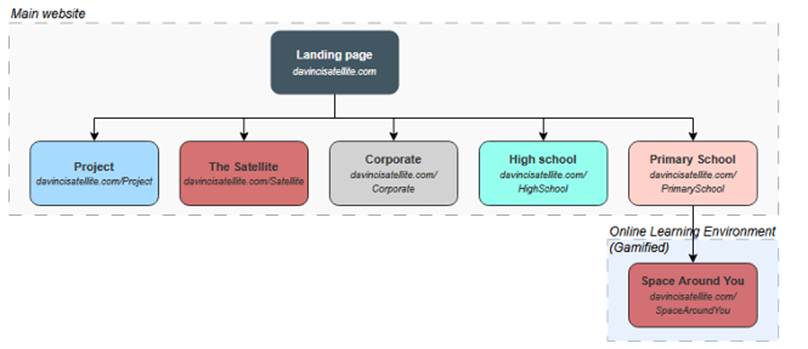
Functionality of the website
Technical Team
The technical department is working hard to ensure that our ESA FYS! programme stays on track. There have been some slight delays to testing with ESA due to delays in manufacturing the parts. Currently, we are planning to conduct our payload qualification campaign in Belgium in April and qualify our command and data handling unit in May 2026. Then, this summer, we plan to start assembling the satellite and all of its subsystems.
The technical department is made up of many sub-departments, which are each responsible for a subsystem of the satellite, or ensuring that all the subsystems communicate and integrate with each other. The ADCS team is actively testing hardware in the cleanroom, including magnetometers and reaction wheels. They are also preparing for integration, which is planned for this summer. Current work focuses on ensuring that the ADCS board communicates correctly with its measurement units, such as its sun sensors and magnetometers, and that it can properly control the satellite’s orientation using magnetorquers and reaction wheels. They are also prioritizing fixing mode-switching software issues so that functional testing can continue.
We are currently in Phase D1 of the ESA Fly Your Satellite! programme. We are mainly working on payload environmental testing, and will subsequently move on to integration testing. During the
environmental testing, our payloads will be subjected to the vibrational and thermal loads that could be experienced in space. This testing will take place in April. We have recently received the green light, which means the testing will go ahead. We will begin integration testing this summer, and then perform functional and mission tests towards the end of 2026. Our flight acceptance review and subsequent launch will then hopefully take place in the 2027/28 academic year.
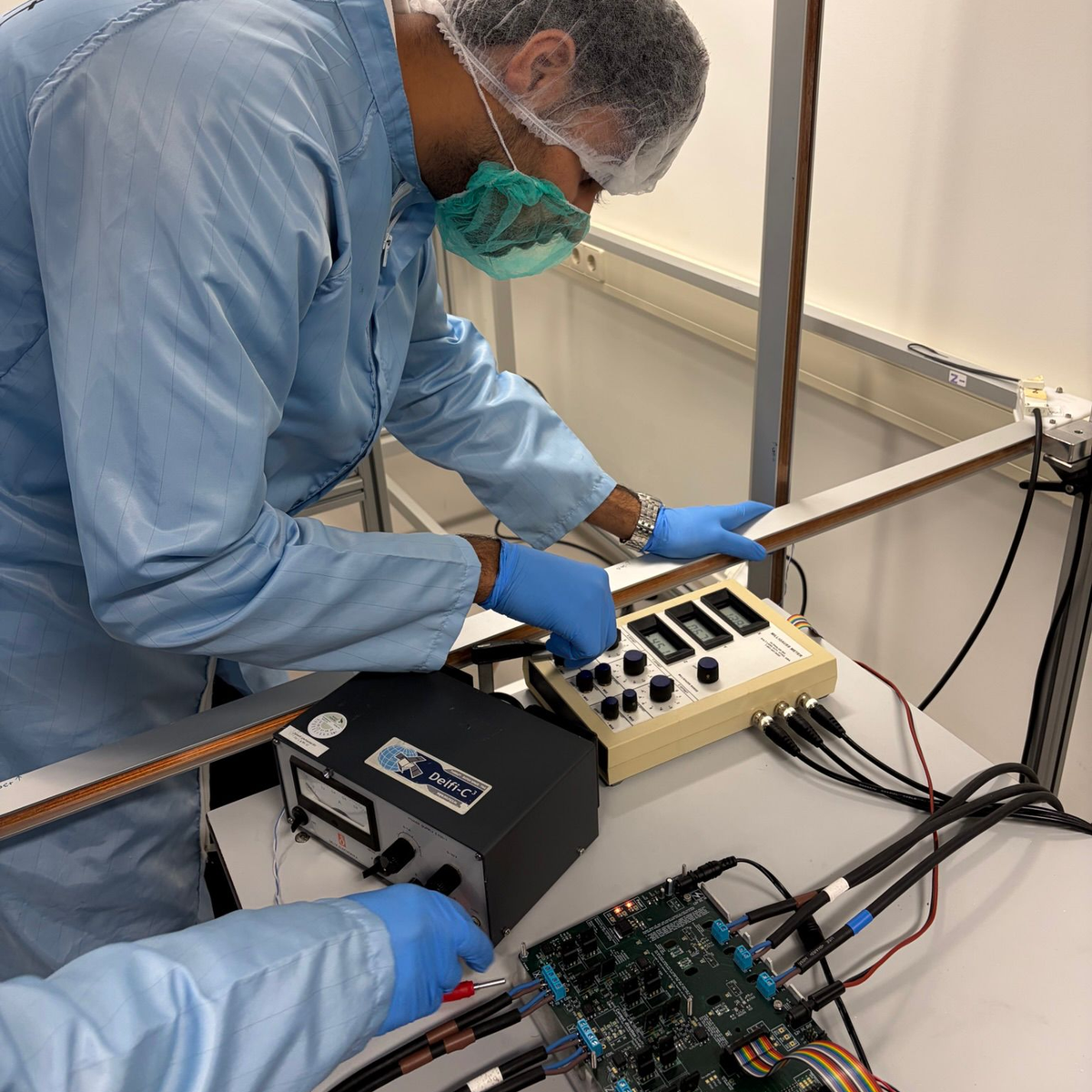
Testing in the clean room
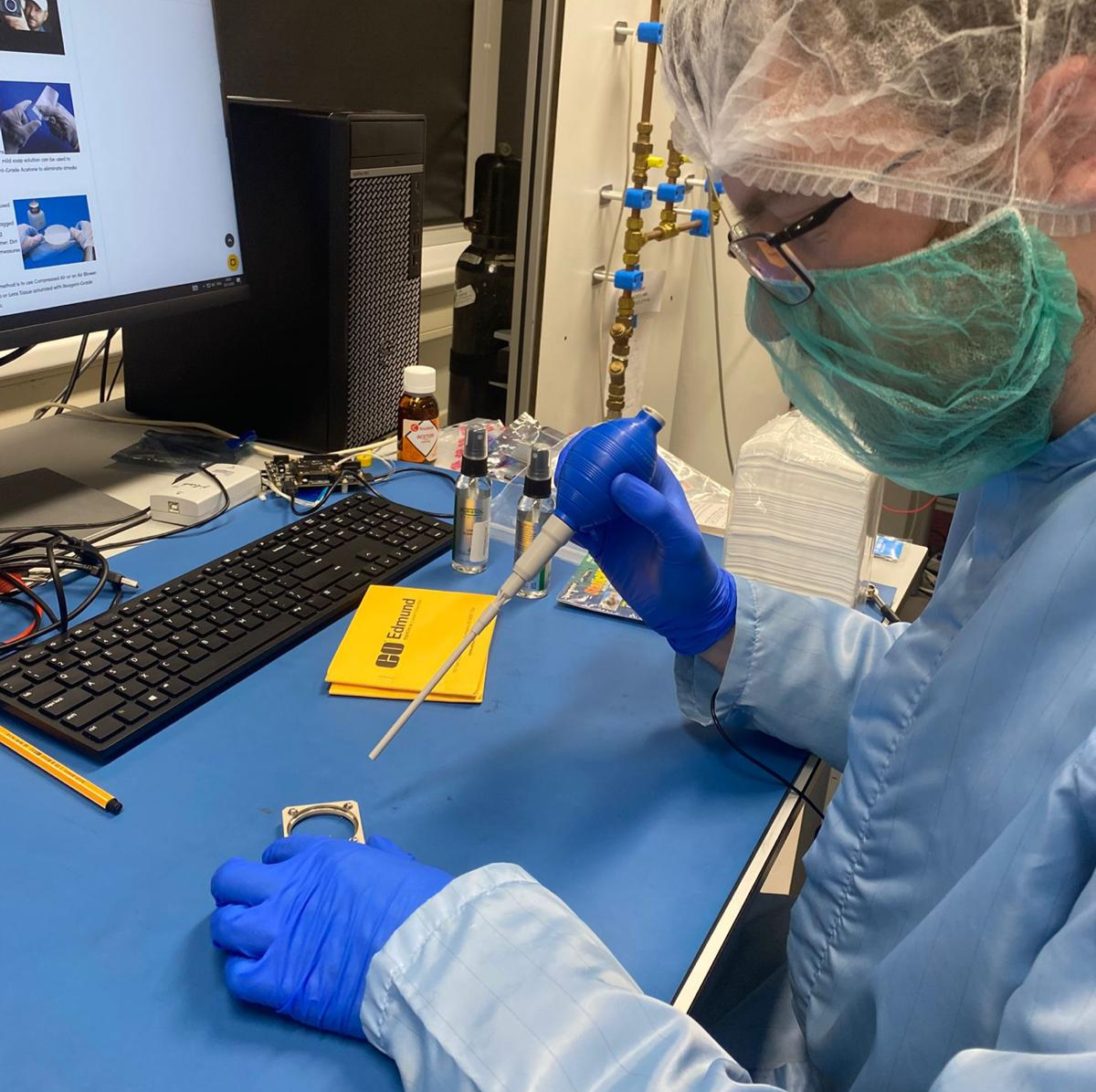
Manufacturing the dicepayload
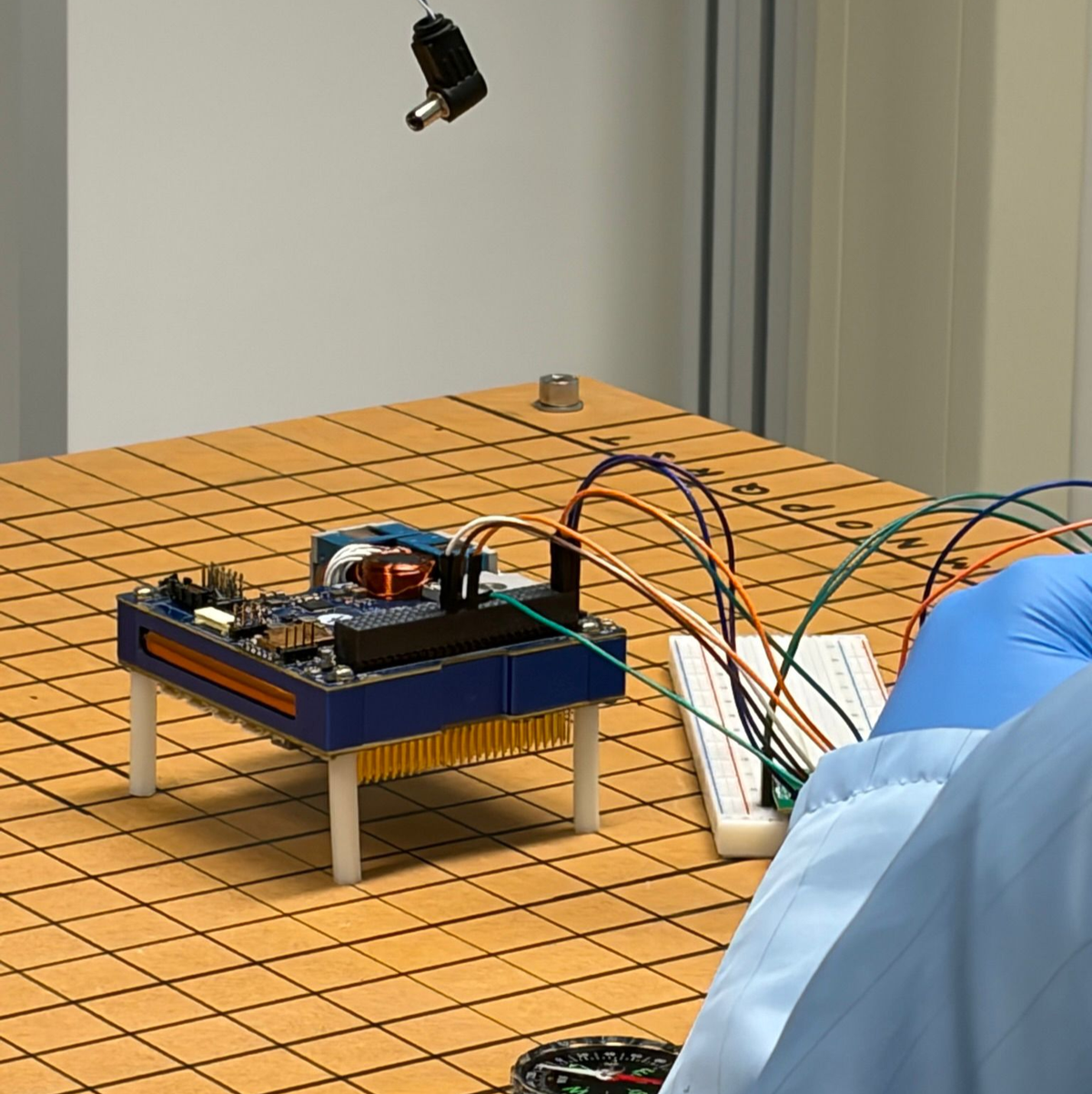
ADCS in the clean room
The Dice payload team faced some setbacks with the sledge hardware that initially risked delaying their greenlight meeting. These issues were ultimately resolved thanks to strong efforts from the team, allowing the project to receive the greenlight. This is a big milestone, since this means we can officially go to ESA for testing. The Bitflip team has made major progress this quarter. They moved from not having functional boards to achieving a functional Bitflip for the first time in the project. In April, they will travel to Belgium together with Dice to perform testing at ESA with their experts.
The CDH team is focused on preparing for the CDH test campaign. They are writing Test Specification and Test Procedures (TSTPs), conducting interface testing, and ordering and soldering the new hardware, including the data board. We have recently received a new data board, and testing is planned to begin in May. The board will receive data from the satellite’s sensors, process the information, and distribute commands to the rest of the satellite.
The Software team is developing dedicated test software for the CDH environmental campaign. They have successfully established I²C (Inter-Integrated Circuit) interfaces and are preparing dummy devices for the data board campaign. I²C allows multiple devices to communicate over only two wires. In addition, they are working on restructuring the entire flight software repository.
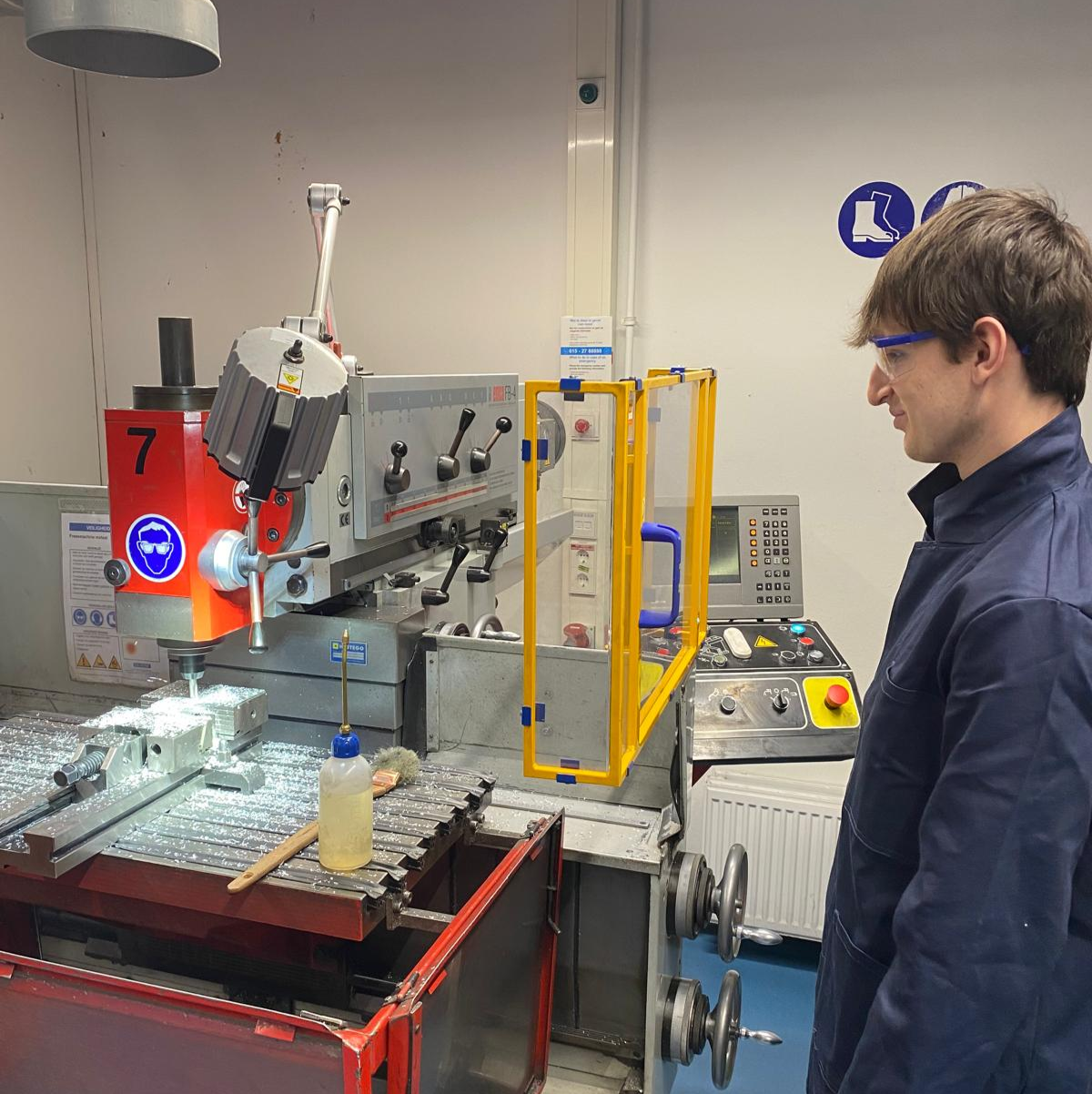
Manufacturing
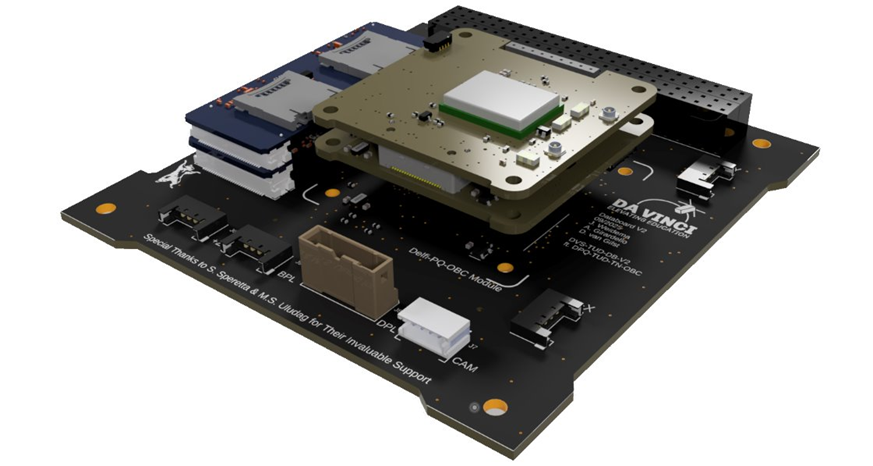
Render of the new data board
The EPS team has made significant progress on developing drivers for the electrical power system and is currently gathering information for a potential redesign of the solar panels. The Structures & Thermal team has conducted thermal analyses and created geometric models for the data board and CDH. They are also updating payload CAD models and documentation.
The TT&C team is developing transmission testing procedures. They are also focusing on improving internal organization and are currently looking to appoint a new team lead, as the position is vacant.
Finally, the Systems team is updating requirements, including the TS-VCD table and Bitflip requirements, based on feedback from ESA. They are also running simulations related to battery lifetime and communication windows.
Education
This quarter the education department has been focused on two modules for high school: The computer science books, and the masterclasses. Next to the continuous development of educational modules, the team has been hard at work at streamlining existing processes to foster and maintain in-house knowledge and to ensure an education legacy far into the future.
We are working on building masterclasses for the students, one of which we will present all seven completed masterclasses are in the process of being externally validated through classroom testing by the DVS team. Currently, the focus lies on the extensively classroom tested ‘Mars’ masterclass, which includes a habitability boardgame and is being validated ahead of the on-campus masterclass event. Another focus is on the ‘How rockets work’ masterclass, which is soon to be tested on a school in Rotterdam. The next step after this external validation, is the validation of the independent use of the masterclasses by teachers without the direct help of Da Vinci Satellite to ensure scalability. In the fourth quarter, the final eight masterclass will start development.
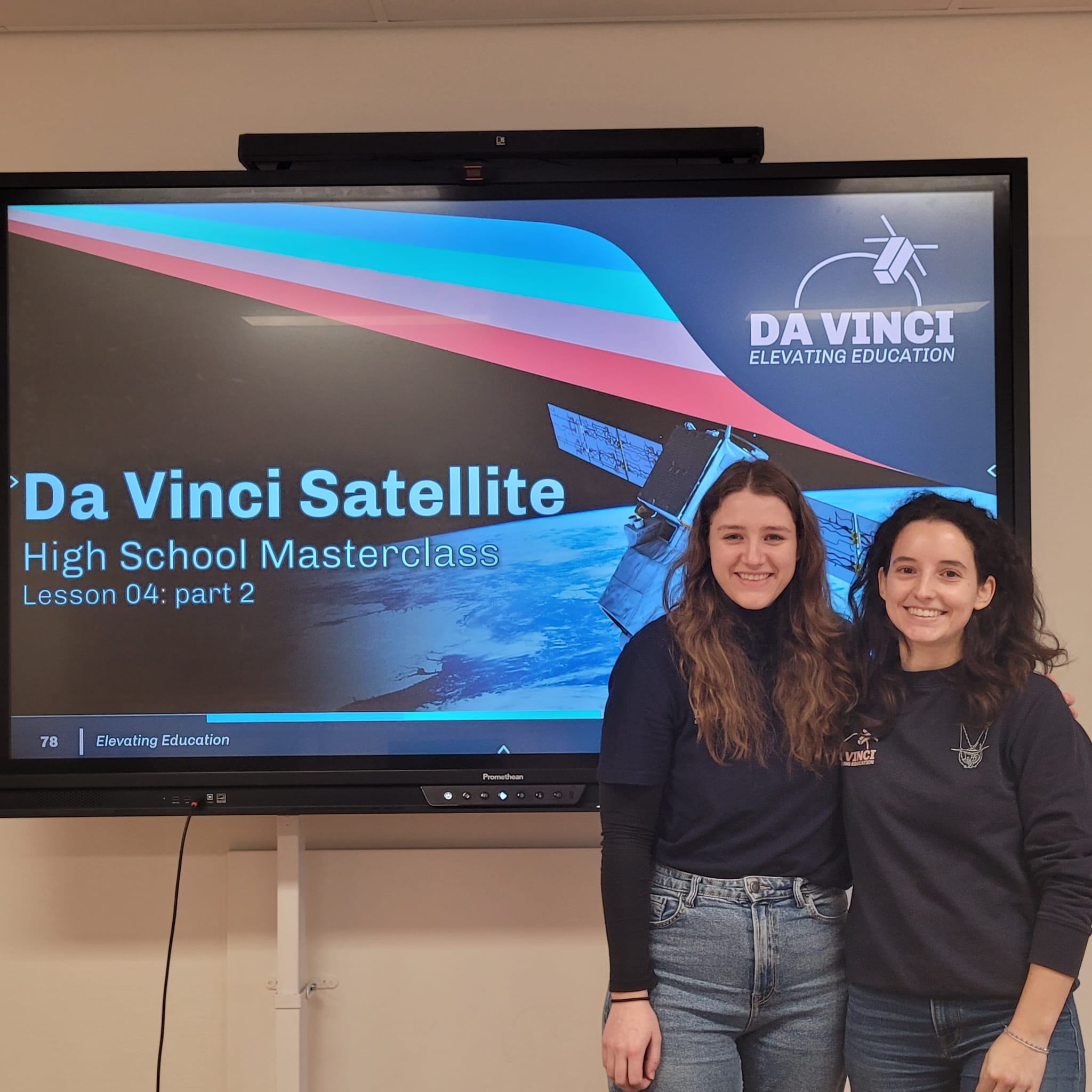
Teaching our masterclass
Book - Introduction to Spaceflight
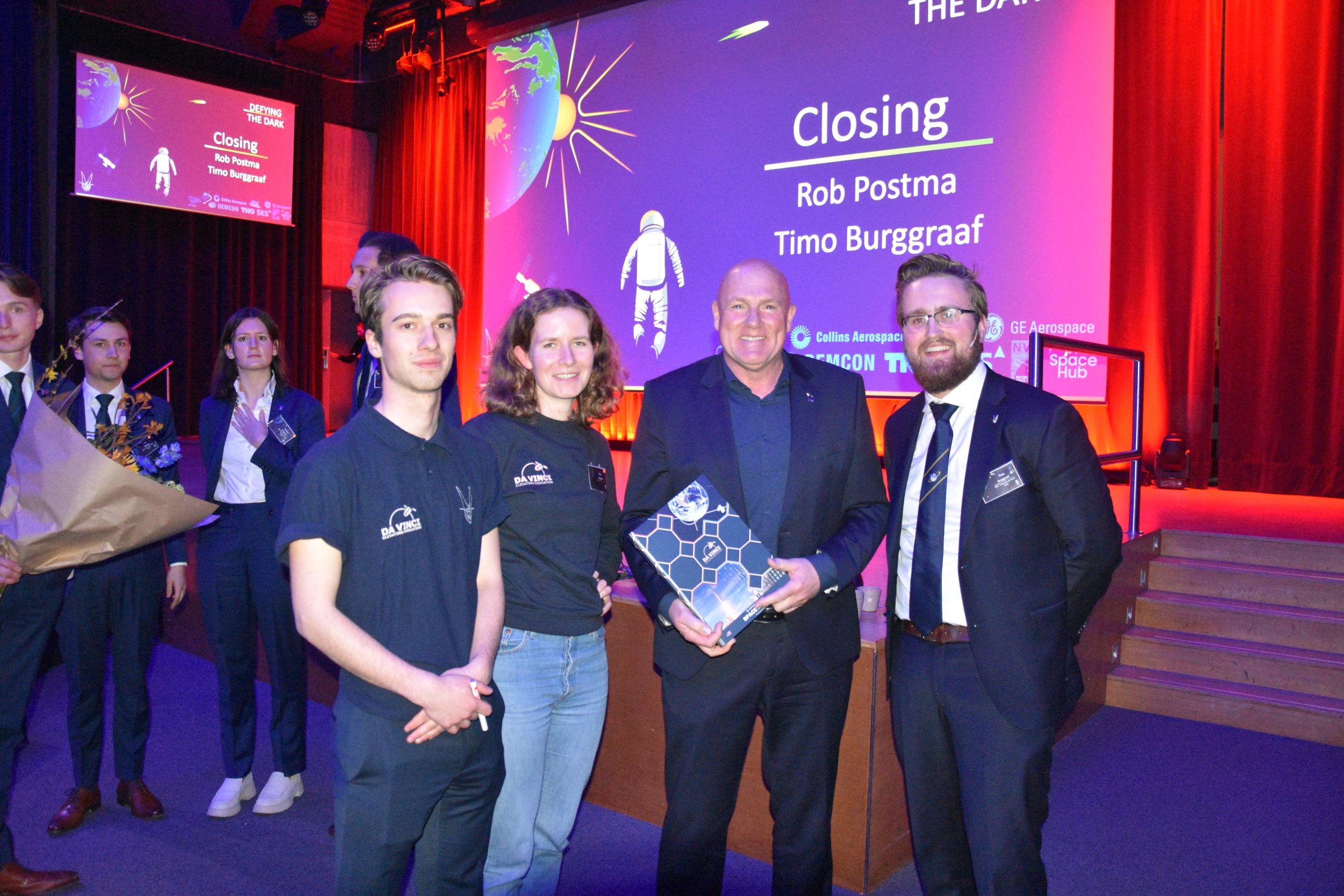
André Kuipers showing our book
The education department is currently working on the development and finalisation of an educational textbook that combines information about our CubeSat with broader knowledge of astronautical engineering. The book is written at a high school level and is designed to introduce students to key concepts of satellite design and spaceflight without requiring highly technical background knowledge. At the same time, it includes a variety of exercises intended to challenge students and encourage active problem solving in several relevant fields. The textbook is relatively extensive, consisting of approximately 350 pages divided into three main chapters: Introduction to Spaceflight, Orbital Dynamics, and Error Detection and Correction in Spacecraft using Coding.
For the computer science sections of the book, which have already undergone external validation, a final round of internal validation is currently being conducted for both the printed and digital versions. The chapters on orbital dynamics and error detection and correction each conclude with a large, multi-hour practical assignment. These practicals are internally validated using dummy satellite data and dedicated computer simulations, which also allow students to explore scenarios such as future non-nominal satellite operations (for example, temporary loss of contact with ground stations).
If you visited one of our recent open days, you may have seen a test version of the textbook. The current focus is on finalising the book, a process that will be completed once the CubeSat itself is finalised. Some example pages from the book are shown below, illustrating how the material combines technical explanations with practical exercises.
Business
New team clothes were ordered for the team for this academic year. The communication department ordered sweaters, polo shirts and jackets, all of which feature our mission patch logo on the back. We also have three new stickers with three different designs. Finally we will also 3D print keychains of our satellite.
TU Delft is organising an open day on 20 March, where we will have a stand. During the open day, we will share our mission with visitors and, hopefully, help students make an informed decision about their future by showcasing the exciting opportunities available in the field of aerospace, such as developing and working on a satellite. We will also be showcasing our 3D printed model of our CubeSat at the open day.
Da Vinci Satellite is going to be more active on social media. To celebrate International Woman’s Day on the 8th of March, we filmed interviews with women on our team. Additionally, we are currently interviewing and setting up short videos of sub-departments within the team. We will use these videos as an opportunity to show people who is working on our satellite and to give viewers a better understanding of our satellite. These will come out on our Social Media platforms, LinkedIn and Instagram, as well as our website. and will be the perfect opportunity to get a better insight into what we do.
The Finance Department has recently welcomed a new treasurer into the team, who will take care of our budget and expenses. Additionally, the finance team is exploring the possibility of partnering with Maxon Motors to provide motors for our flight model. Furthermore, we are re-establishing contact with AzurSpace, who provided us with solar cells. The department is constantly gathering and working on new opportunities to acquire new funds and deals for the team.
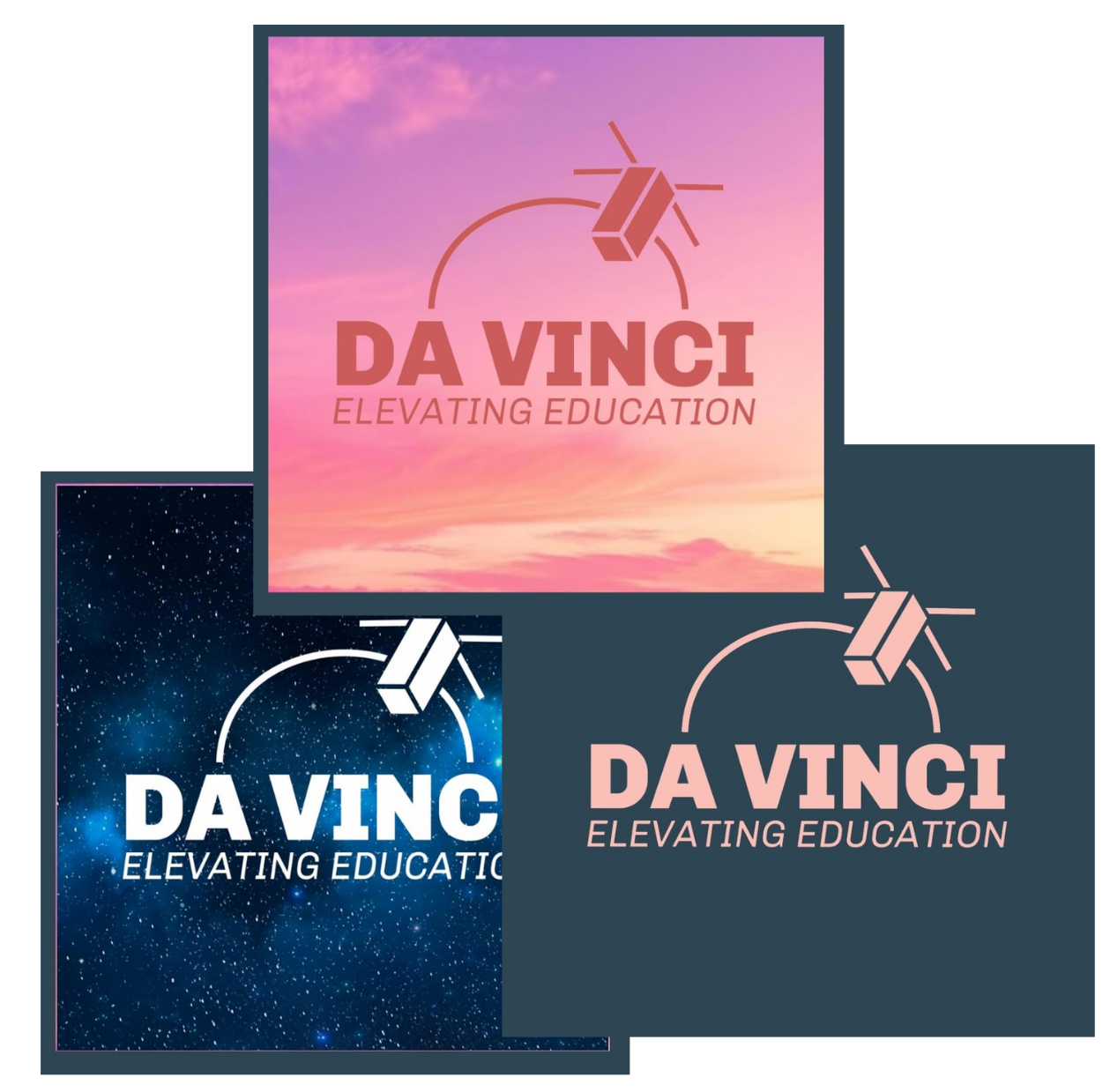
New stickers
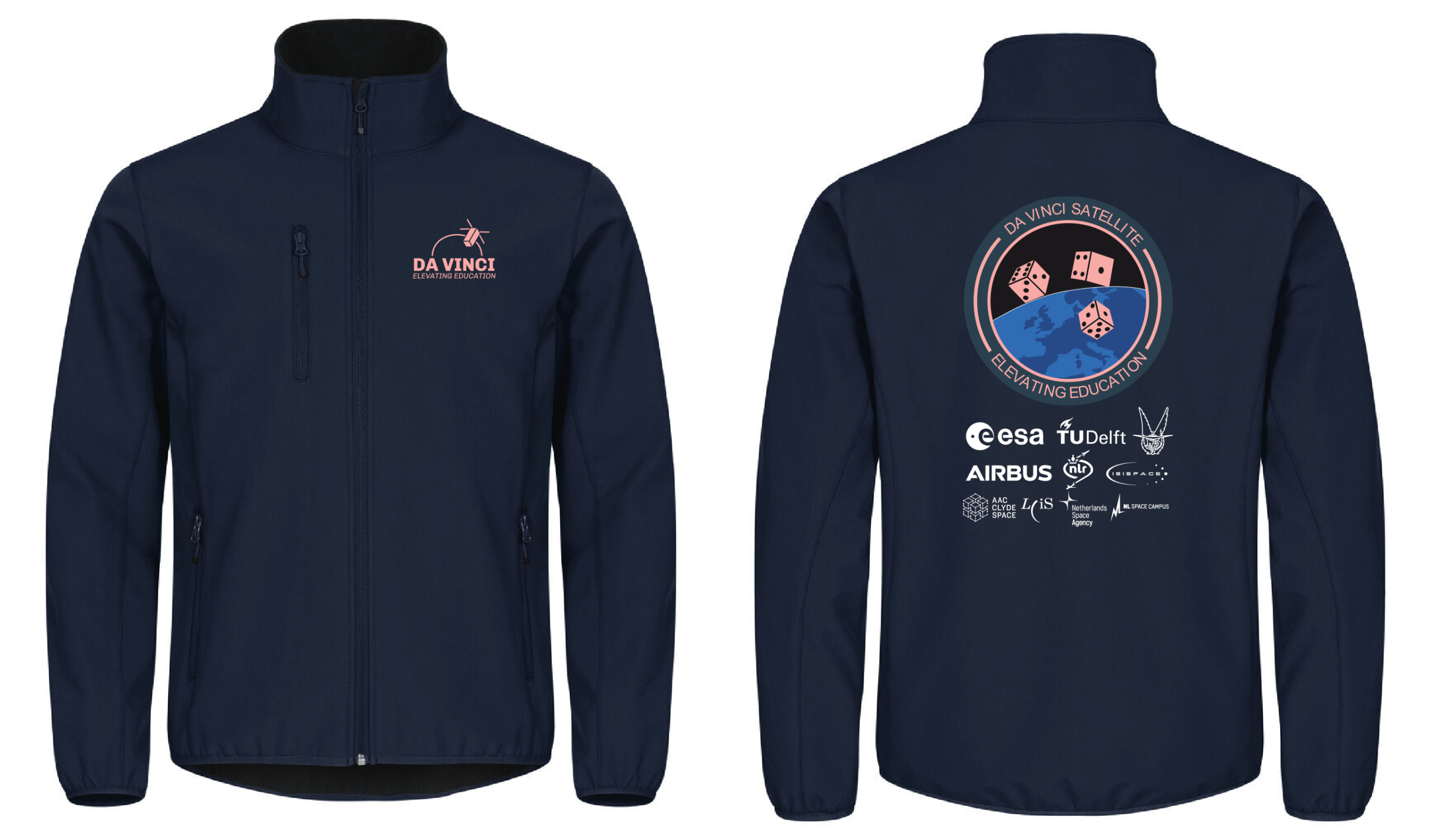
New jackets